
Checking Criminal History in Rapides Parish
Start a Rapides Parish criminal history search by deciding whether the need is a court outcome, present custody fact, police report, or identity-based state record. Rapid E-Search and Clerk Connect point to Ninth Judicial District Court filings. The sheriff roster addresses present parish custody. An arresting police agency holds its own incident narrative, while Louisiana State Police maintains the Louisiana Computerized Criminal History system, known as LACCH. No one screen replaces the others.
Use the full legal name, spelling variants, and a known docket, report, booking, or arrest number when available. Date of birth can help an authorized office distinguish similar names, but public court results may not display enough identity data to settle a match. Work from the narrowest known event toward broader sources.
- Search the Rapides Parish Clerk channel for a filed prosecution and its docket number.
- Check the official roster only when current parish custody is the question.
- Request the incident or offense report from the agency that created it.
- Read each filed charge and final disposition instead of relying on the booking allegation.
- Ask the Clerk for a certified copy, or use the fingerprint Right to Review process for your own Louisiana record.
Rapides Parish Rapid E-Search
The Rapid E-Search access page is the named remote route for Rapides Parish court inquiry and document purchases. Clerk Connect also supports account-based inquiry and filing functions. These services help locate a docket, but the Clerk states that records filed and indexed in the office remain the official public records. A printed portal result is not a certified disposition.
The portal supports broad party work and more exact case work. Search a complete name first, try known variants, then narrow by the filing period. A docket number is stronger than a name match. Once the right case appears, inspect events, minutes, charges, and the outcome for each count. For proof, order the court document from the Criminal Department rather than treating a results list as the record itself.
| Search input | Best use | Limit |
|---|---|---|
| Party name | Finding an unknown docket | Aliases and common names can obscure a match |
| Case number | Returning to one prosecution | Must be copied exactly |
| Filing date range | Narrowing a large result set | Booking and court filing dates may differ |
| Document image | Reading an available filing | Access or purchase may be gated |
The Rapides Parish Clerk homepage shows the office channel behind the online service.
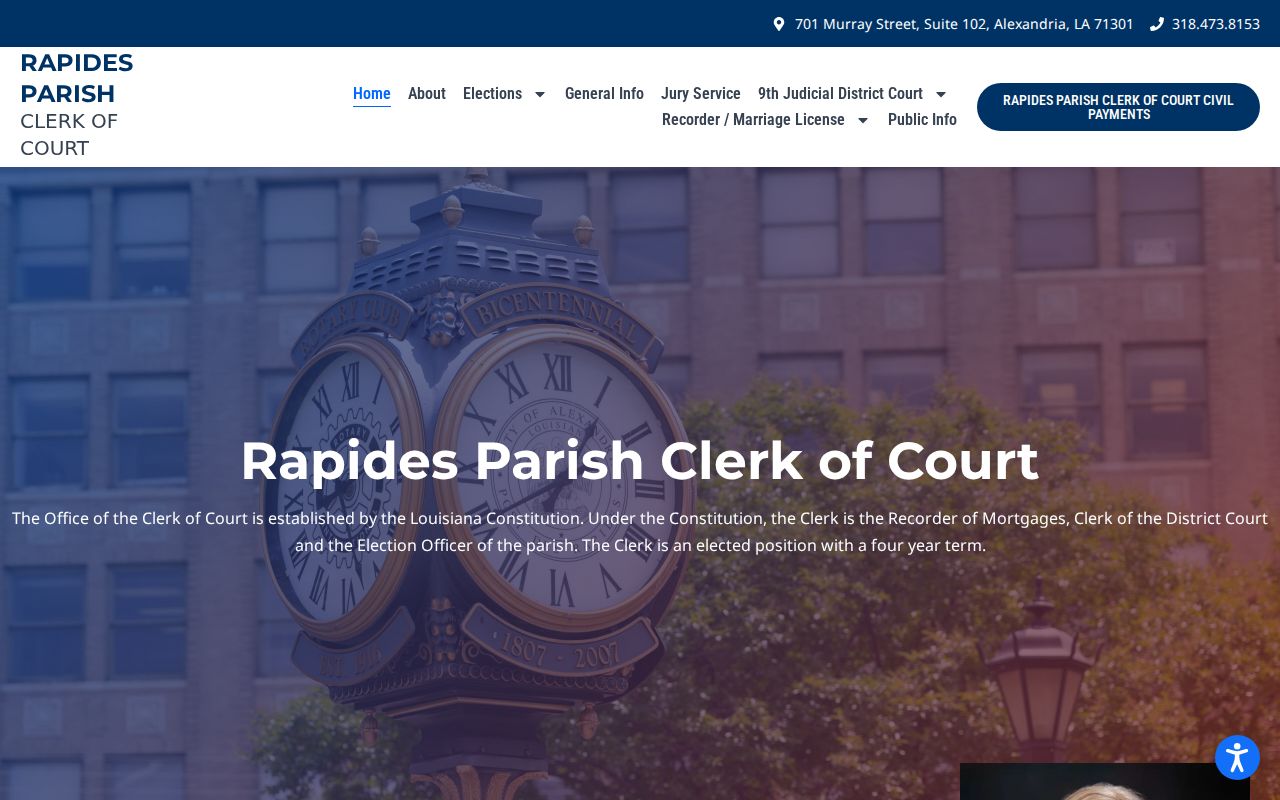
The Clerk source confirms that Rapides Parish criminal court records belong with the local judicial custodian.
Louisiana Official Background Checks
Louisiana does not offer an unrestricted public name search of full LACCH rap sheets. The Louisiana State Police Bureau of Criminal Identification and Information controls criminal-history dissemination under state law. Authorized entities use the Internet Background Check portal for permitted purposes. An individual who wants a certified copy of their own Louisiana criminal record uses the LAPS fingerprint-based Right to Review channel.
LAPS means Louisiana Applicant Processing System. It captures fingerprints through the state workflow, which gives the repository a stronger identity match than a public name query. The record can contain Louisiana arrest cycles and reported dispositions, probation or parole bookings, and incarceration data. It does not contain every record from other states. LSP reports a five-dollar technology fee added to background-check requests, but the total depends on the authorized purpose and fingerprint transaction. Confirm the current amount before scheduling.
The LSP BCII criminal-history page explains the repository and review channels.
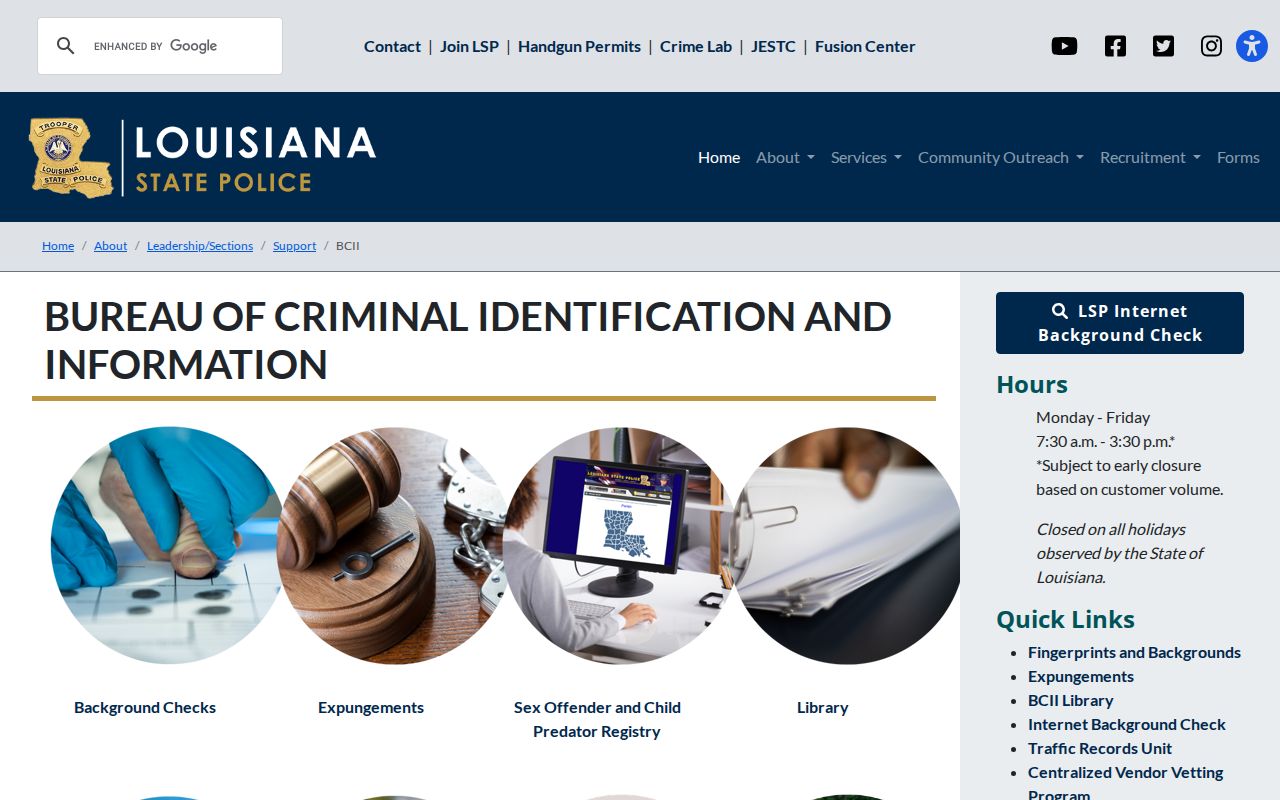
That official page is the sound starting point when a Rapides Parish resident needs their own fingerprint-linked state history.
Rapides Parish Arrest-to-Court Record Flow
Records move through Rapides Parish in stages. An arresting agency first creates the incident report. If a person is booked, fingerprints can create or match a LACCH arrest cycle. The district attorney later decides which charges to file, amend, or decline. The Rapides Parish Clerk opens the Ninth JDC case when court papers arrive. The court then records pleas, hearings, judgment, and sentence. A disposition should flow back to LACCH, though reporting delays and missing older data can leave a gap.
Record flow: Incident report › Booking and fingerprints › District attorney charging decision › Ninth JDC case › Disposition reported to LACCH.
This sequence explains why a Rapides Parish arrest entry may appear before a case, why a filed count may differ from the jail allegation, and why an old state record may lack closure. Correct the source record first. The Clerk addresses an underlying Rapides Parish case error, while LSP provides the challenge route for an incomplete or inaccurate state record.
The Louisiana criminal-history dissemination law helps define who may receive repository information.
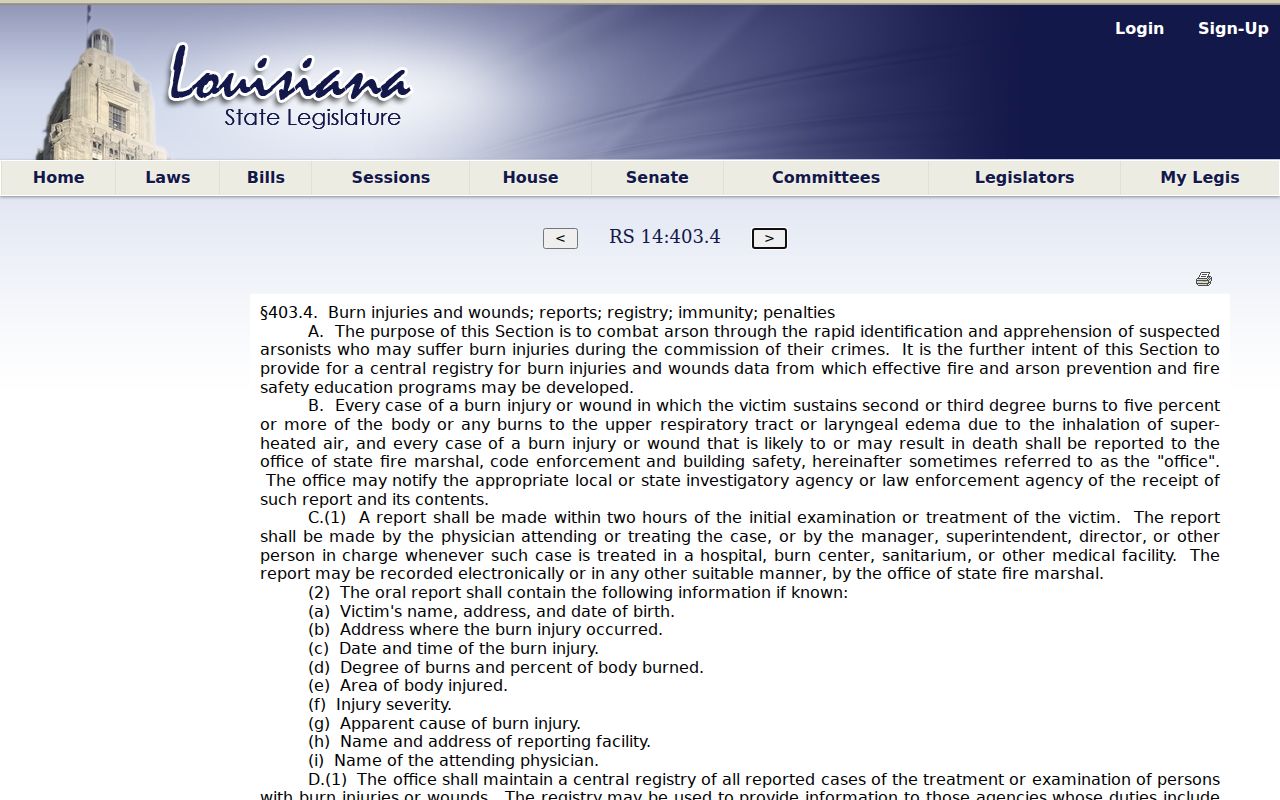
The law is why local public files and the restricted state rap sheet should never be described as the same product.
Criminal Record Types
Rapides Parish criminal records are split by both event and custodian. The police report explains what an agency recorded. A booking file documents custody and alleged charges. The court file records the prosecution. LACCH compiles fingerprint-linked state data. Corrections and registry systems answer still other questions. Choose the source that directly controls the fact being checked.
- Incident reports: Alexandria Police, Pineville Police, RPSO, or another arresting agency keeps its own narrative and investigative material.
- Booking records: RPSO custody data records a booking event, not a finding of guilt.
- Court cases: the Rapides Parish Clerk keeps Ninth JDC pleadings, minutes, process, judgments, and sentences.
- State histories: LACCH ties Louisiana arrest cycles and reported outcomes to fingerprints.
- Custody and supervision: jail, DPS&C, probation, parole, and registry records each have a separate official channel.
- Disposition
- The result for a filed count, such as dismissal, acquittal, or conviction.
- Bench warrant
- Court process commonly issued after a failure to appear or another judicial order.
- Rap sheet
- An identity-based repository compilation, not a copy of one court file.
- Certified copy
- A court copy authenticated by the Clerk for official proof.
Rapides Parish Jail and Custody Records
Rapides Parish does not have one interchangeable jail address. The state corrections directory lists Detention Center I at 700 Murray Street, Detention Center II at 400 C. John Allison Drive, and Detention Center III at 7400 Academy Drive. Facility phone numbers are 318-473-6750, 318-449-4360, and 318-449-4381, in that order. The Transitional Work Program is listed with Center II. Official capacity figures were not located, so none should be inferred.
The RPSO roster can show the current offender count, an update time, alphabetical filters, and a VINE notification link. Its own warning says the roster is not an official public document and restricts unauthorized copying or publication. A missing name may mean release or transfer. It does not prove that an arrest never happened or that a charge was dismissed.
The DPS&C Rapides Parish directory identifies the facilities and their contacts.
The directory provides the proper facility fallback when an online custody result is unclear.
Inside a Rapides Parish Criminal Record
A Rapides Parish criminal record can show identity, an arrest cycle, judicial events, and custody or supervision, but the contents depend on the source. A local docket may contain a caption, case number, division, judge, filing date, charges, court minutes, counsel, orders, judgment, and sentence. A LACCH record centers on fingerprint-supported identity and reported Louisiana events. The sources overlap without being identical.
| Name and identifiers | Legal name, aliases, birth date, physical descriptors, Louisiana SID, and transaction references when present. |
|---|---|
| Arrest cycle | Booking date, arresting agency, tracking number, and alleged charge descriptions or statutes. |
| Court segment | Docket data, filed charges, hearings, plea or trial, disposition, judgment, and sentence. |
| Process and bond | Warrants, returns, bond type or amount, forfeiture notices, and subpoenas when public. |
| Corrections segment | Reception, incarceration, probation, or parole information reported to the state system. |
| Limits | Sealed, juvenile, victim-sensitive, expunged, presentence, or active investigative material may be hidden. |
A “closed” docket does not itself prove conviction. Read the disposition for each count and the minutes that support it. Likewise, a state “no record” response does not establish that no Rapides Parish report or local case exists.
Rapides Parish Custody Record Search
LA VINE adds a statewide custody and notification layer for sentenced DPS&C custody and community supervision. It searches by location, name, and ID or case number, and the research reports daily updates. The telephone Imprisoned Person Locator at 225-383-4580 requires a DPS&C number or a name and date of birth. It can provide housing assignment, facility contact, and a projected release date when applicable.
That statewide tool should not be confused with the current Rapides Parish jail roster. One answers state custody and supervision questions, while the other reflects current parish detention. Federal custody is separate again and belongs in the Bureau of Prisons locator. Always note the date of the result and call the listed facility when timing or safety makes current status vital.
The Louisiana inmate information page explains LA VINE and the telephone route.
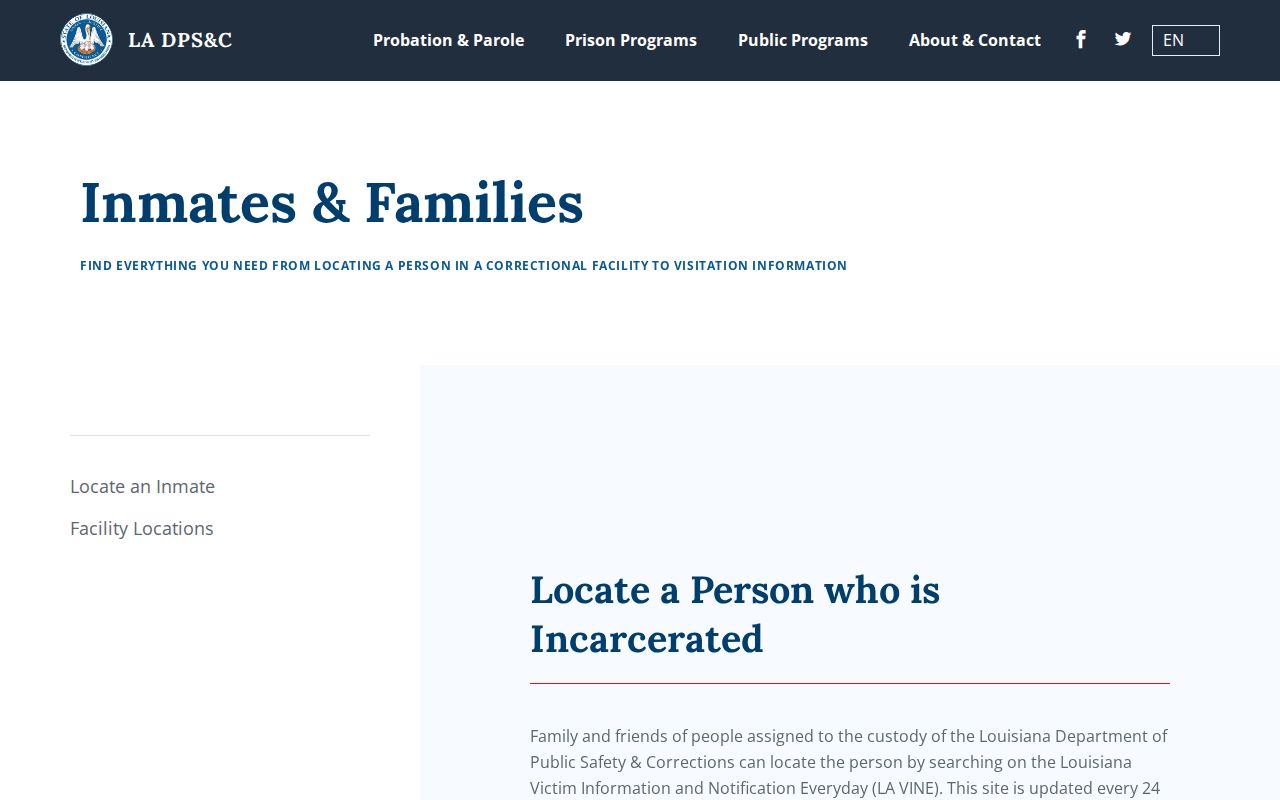
The official locator instructions make clear that parish jail, state prison, and supervision searches have different scopes.
Louisiana Public Access Laws
Louisiana Public Records Law favors access to public documents, but it does not erase specific limits on investigative files, repository histories, sealed cases, juvenile files, or protected victim data. The office holding the record is the custodian. A request to RPSO cannot force LSP to release a restricted LACCH product, and a court-record request belongs with the judicial custodian.
Key statutes:
R.S. 44:1 defines public records and custodians. R.S. 44:3 protects specified law-enforcement and investigative material. R.S. 15:587 controls criminal-history dissemination. R.S. 15:588 authorizes an individual's Right to Review.
Ask for an identifiable existing record, not an open-ended explanation. Give the office a report number, arrest date, location, booking number, case number, or narrow date range. Request inspection or a preferred copy format. When part of a record is exempt, ask the custodian to identify the legal basis and release any reasonably segregable public portion.
Rapides Parish Warrant Verification
No verified current parishwide RPSO warrant database was found. A bench warrant belongs to its issuing court docket, while an active investigative warrant may remain nonpublic. Call the office tied to the process: Alexandria Police Warrants at 318-441-6468, Alexandria City Court Clerk at 318-449-5146, Alexandria City Marshal at 318-449-5149, the Rapides Parish Clerk at 318-473-8153, Pineville City Court at 318-449-5656, or Pineville Marshal at 318-445-3225.
Pineville has an old 2020 warrant-list link, but it is historical and must not be treated as current. If a possible warrant appears, verify the docket and speak with counsel or the issuing court about lawful resolution. After a judge acts, confirm that the recall or clearance reached each relevant system. Do not enter a facility based only on an old list or an unverified name match.
Sealed, Expunged, and Restricted Records
Louisiana calls the remedy expungement. An expunged record is generally removed from public access and made confidential under statutory rules, not necessarily destroyed in every agency system. Eligibility depends on the arrest outcome, charge, conviction, completion of sentence, waiting period, prior history, and exclusions. A roster entry alone cannot establish eligibility.
The Rapides Parish Clerk Criminal Department publishes an expungement checklist and requires the listed materials from counsel or a self-represented applicant. Criminal fax filing is not accepted. Applicants should obtain the correct docket and arrest identifiers, use the current statewide forms, and identify every agency that must receive service. The Clerk can explain mechanics but cannot select a legal theory. Fees may include clerk, sheriff, district attorney, and LSP components, with some statutory waivers or exceptions. Confirm the current Rapides assessment before filing.
The LSP expungement information describes the state repository's role. Juvenile, sealed, victim-sensitive, and active-investigation records have distinct access rules and should not be treated as ordinary public files.
Rapides Parish Records Offices
The records trail is concentrated around Alexandria but divided by legal custody. The Clerk counter is the source for the court file. RPSO is the booking and detention fallback. The district attorney controls prosecution records that belong to that office, while the District 9 Public Defender manages its own counsel and application records. Contact the office before visiting when the request involves a restricted file or a copy order.
Rapides Parish Clerk
701 Murray Street, Suite 102
Alexandria, LA 71301
318-473-8153
RPSO Administration
P.O. Box 1510
Alexandria, LA 71309
318-473-6700
District Attorney
P.O. Drawer 1472
Alexandria, LA 71309-1472
318-473-6650
District 9 Public Defender
620 Murray Street
Alexandria, LA 71301
318-443-7082
The state public-defender directory reports three courts, five divisions, and 5,004 people represented in calendar 2025.
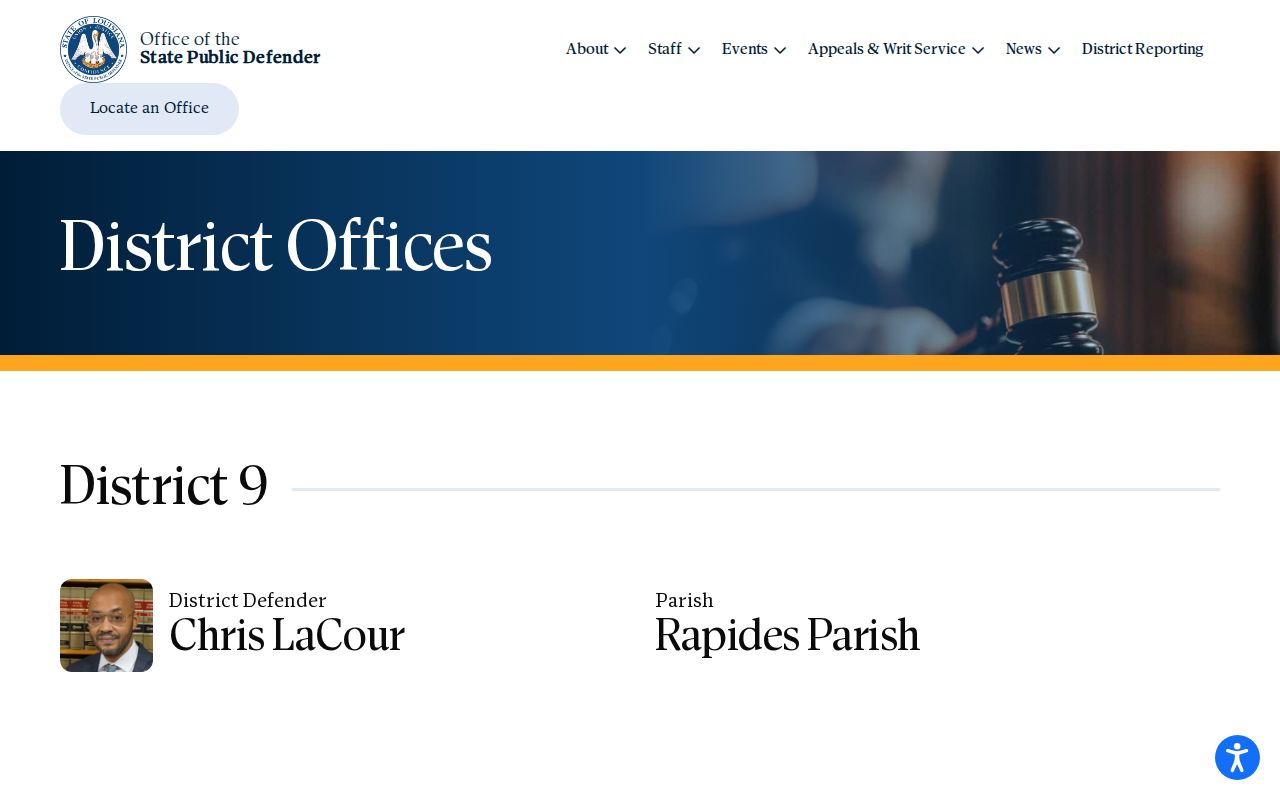
Those figures show why the court level and division matter when tracing a Rapides Parish case.
The Rapides public defender site supplies the local application route.

The local source complements the state directory for people trying to reconnect with assigned counsel.
Rapides Parish Police Report Channels
Alexandria Police accepts police-record requests through policepublicrecordsrequests@cityofalex.com. Its Records line is 318-441-6412. Pineville's Records Bureau is at 910 Main Street and can be reached at 318-449-5653. It keeps arrest, incident, and crash reports. Pineville lists ten dollars for an incident or crash report, with general readiness in three to five business days. A person may obtain a summary of their own Pineville criminal record in person with valid identification for twenty dollars.
For mail requests to Pineville, identify the date, complainant or victim, location, and return address, and include the specified ten-dollar money order. Personal checks are not accepted. Other Rapides Parish municipalities may require a direct call or written public-record request. Ask the agency that created the report. RPSO booking custody does not transfer ownership of a city police narrative.
| Record | Office | Published amount |
|---|---|---|
| Pineville incident or crash report | Pineville Records Bureau | $10 |
| Own Pineville criminal-record summary | In person with valid ID | $20 |
| RPSO report | Relevant sheriff custodian | No current official schedule located |
| Rapides court copy | Rapides Parish Clerk | Confirm current copy or certification charge |
Rapides Parish Criminal Records by City
Alexandria, Pineville, and Ball are the top three incorporated places identified in the research. Their police departments create local incident and arrest records, while city courts or parish courts control the filed case. Each city page stays at the local level and then routes a reader to the Rapides Parish Clerk, RPSO, or Louisiana State Police when the record moves beyond city custody.
Alexandria Criminal Records
Start with Alexandria Police or Alexandria City Court, then follow district cases to the parish Clerk.
Pineville Criminal Records
Pineville publishes a records counter, report prices, and city court contacts.
Ball Criminal Records
Begin with the Town of Ball and use parish channels for booking and district court outcomes.
Rapides Parish State Criminal Record Limits
Louisiana State Police is both a statewide repository agency and a source for specialized public records such as the sex offender registry. Those roles do not create a general public name-based LACCH search. Rapides Parish residents should use court, custody, and registry sites for the public information each law permits, and the fingerprint Right to Review route for their own state criminal-history record.
The Louisiana State Police homepage connects these official services.
The statewide source is a useful final check on portal names and agency contacts, but the original Rapides Parish court and police records remain essential.